Guerrilla Marketing Examples and Rules for Local Brands
Guerrilla marketing examples for local brands that want results, not fines: low-budget tactics, where creativity ends and offences begin, and measurement.
9 min readFortuners Team
The guerrilla marketing examples worth copying for a local brand are rarely the giant street installations that go viral. They are one simple, surprising idea in a place your customers already visit, carried out with the permission of whoever manages that place, and tagged with a code that lets you count the result. Below you'll find what guerrilla marketing means today, how it differs from ambient and viral marketing, tactics a small business can use, the legal line in Poland, a step-by-step plan and ideas for cafés, residential neighbourhoods and office buildings.
What guerrilla marketing means today
The term was popularised by Jay Conrad Levinson in his book Guerrilla Marketing, first published in 1984. It was written for small business owners: if you don't have a corporate budget, replace it with time, energy, imagination and a close understanding of your customers. The name borrows from guerrilla warfare, where a small unit relies on surprise and knowledge of the terrain.
Today, "guerrilla" mostly brings to mind striking urban installations that spread across the internet. Many of them had serious production budgets, permits and a full agency team behind them. For a brand that operates in a few districts, the original meaning is more useful. A good guerrilla activity has three traits:
- It surprises with its form or location, so it breaks the audience's routine.
- It costs little relative to the attention it earns.
- It happens close to the customer, where they can act straight away: scan a code, walk into the shop, sign up.
Guerrilla vs ambient vs viral marketing
These terms get mixed up because one campaign can combine several of them. What sets them apart is what matters most in each.
| Term | Core idea | Where it works | Typical format |
|---|---|---|---|
| Guerrilla marketing | low budget, surprise, clever use of surroundings | streets, venues, events, online | unexpected intervention, micro-event, game with a code |
| Ambient marketing | a medium built into the audience's surroundings and context | everyday places | coasters, cup sleeves, in-venue items, packaging |
| Viral marketing | content people pass on by themselves | mostly online | video, photo, challenge, meme |
| Word of mouth marketing | conversations based on real experience | offline and online | recommendations, referral programmes, moments worth retelling |
| Street marketing | direct contact with passers-by | streets, public space | sampling, brand ambassadors, stands |
| Ambush marketing | piggybacking on someone else's event | around big events | messaging near stadiums or festivals |
Two popular "types" deserve a warning. Ambush marketing often runs into trademark rules and event organisers' restrictions, so it's rarely a good fit for a small brand. Stealth marketing, where hired people pose as ordinary customers, can cross into misleading practices: EU consumer law, which Poland applies, bans falsely representing yourself as a consumer.
Guerrilla is an approach rather than a medium. If you're interested in media built into everyday surroundings, read our ambient marketing guide. If you want people to tell their friends about your brand, see word of mouth marketing offline.
Guerrilla marketing tactics a small business can actually use
The tactics below have one thing in common: you carry them out on premises whose manager has agreed, or together with a venue that decides what reaches its guests.
- A surprise in someone else's venue. An item guests don't expect, handed over at a natural moment: a fortune cookie with the bill, a bookmark with a riddle in a bookshop, a sticker with a code on a takeaway box. The venue approves the content before launch.
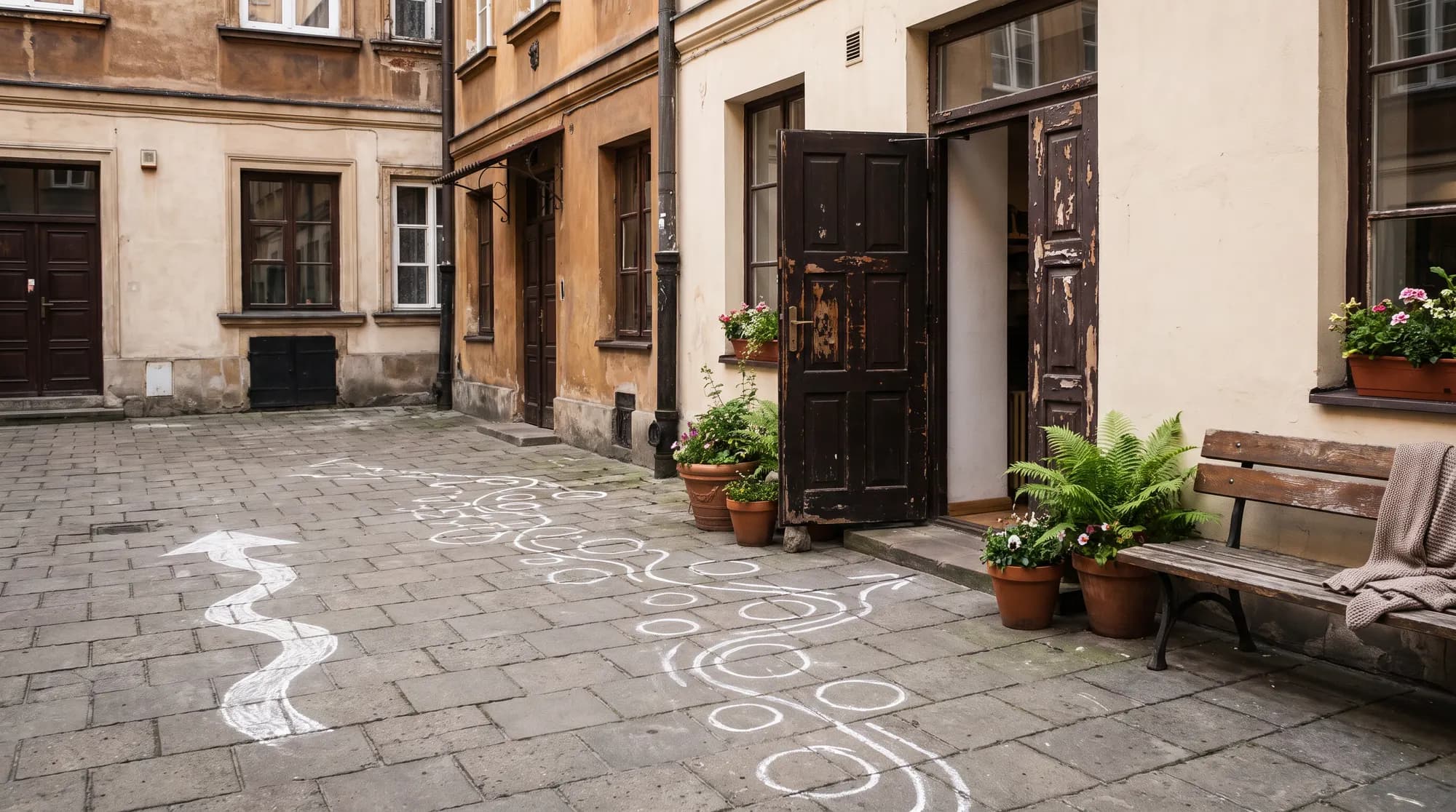
- An intervention on private property. Floor stickers, chalk or washable markings in an office courtyard, a shopping arcade or a residential courtyard, with the manager's consent and a removal date.
- A micro-event at a partner's space. A 15-minute stretch session in an office lobby run by a movement studio, a mini language lesson in a café, a bike repair demo in a shop's car park.
- A neighbourhood game with codes. Clues hidden at several partner venues in the district, with a prize collected at your shop. Each partner has its own code, so you can see where participants come from.
- A response to local context. A message on your own shop window or A-frame sign that reacts to what's happening nearby: a heatwave, roadworks, a big match, the first day of school.
- An unusual medium you already own. Your window, packaging, bags or delivery bike. You usually don't need anyone's consent here, but anything visible from the street must follow local signage rules.
| Tactic | Legal and reputational risk | How to measure |
|---|---|---|
| Surprise in a partner venue | low, when the venue approves the content and format | a separate QR code or discount code for each venue |
| Markings on private property | medium: manager's consent needed, removal after the activity | a code on the marking, footfall during the activity |
| Micro-event at a partner's space | low to medium: safety, noise, keeping walkways clear | sign-up list, code on the invitation |
| Neighbourhood game with codes | medium: many partners and touchpoints | scans at every stage, prizes collected |
| Response to local context | low, as long as you don't joke about other people's problems | a password given at the till, same-day sales |
| Posters or writing on someone else's wall without consent | high: petty offence, removal costs, reputational crisis | don't do it |
Where creativity ends and offences begin
Below is a general overview of the Polish rules that guerrilla marketing most often runs into. It isn't legal advice. Before any activity in public space, check the details with a lawyer and with the site manager. If you run campaigns outside Poland, local rules will differ.
Notices, posters, writing and drawings. Article 63a of the Polish Code of Petty Offences (Kodeks wykroczeń) covers placing a notice, poster, bill, appeal, leaflet, writing or drawing in a public place not intended for that purpose, or displaying one publicly elsewhere without the consent of the person who manages the place. Writing and drawings are named explicitly, so don't assume that chalk on a pavement or "reverse graffiti" (a design cleaned into a dirty wall) is automatically fine. Incitement and aiding are also punishable, which means the risk isn't limited to the person holding the chalk: it can extend to whoever commissioned the activity. A court can also order the site to be restored to its previous state.
Littering and damage. Scattered leaflets or giveaways left in a park can be treated as littering a publicly accessible place. Paint, permanent stickers or glue on someone else's building create a risk of liability for property damage, and whether that counts as a petty offence or a crime depends on the value of the damage.
Pavements and streets. A stand, an installation or even a large object on a pavement usually counts as occupying the public road area (in Polish law, the "pas drogowy", which includes the pavement), and that requires a permit from the road authority. Permanent displays and signs are also subject to local landscape resolutions, where the municipality has adopted one, and placing an advertisement on a monument entered in the heritage register requires a permit from the regional heritage conservator.
Pushiness. Poland's Act on Combating Unfair Competition treats advertising that significantly intrudes on privacy as an act of unfair competition, in particular by pestering customers in public places. Stopping people, blocking their way and pushing leaflets into their hands isn't guerrilla marketing. It's a quick route to a bad reputation.
Safety and good taste. Don't block walkways, don't imitate emergency services or alarms, don't frighten passers-by and don't use monuments or memorials. A stunt that scares someone at a tram stop will be remembered, just not the way you want.
How to plan a guerrilla campaign: idea, place, risk, measurement
A good guerrilla activity looks spontaneous but is carefully prepared. This plan fits on one page.
1. Goal and one measurable action. Write down what the audience should do: scan a code and book a trial class, come in with a password for a free coffee, claim a discount. "Raise brand awareness" is too vague to measure.
2. Place and moment. Where do your customers have a moment of attention while being close to you? Pick a place where that moment really happens: a coffee break, waiting for the bill, the walk from the office to the tram.
3. The idea and a three-question test. Will a passer-by understand the message in a few seconds? Is the idea connected to what you sell, rather than just funny? Can it be carried out legally and without harm to anyone?
4. Consent and risk. Find out who manages the site: the venue owner, the office building manager, the housing community or the road authority. Get consent in writing, prepare a plan B for rain and a clean-up plan.
5. Measurement. Each location gets its own QR code, discount code or password. Set the period in which you'll count results and a baseline: the same period a week earlier or a similar location without the activity.
6. Lessons learned. After the activity, write down the numbers and what you observed on site. For the next round you'll already know which places and messages worked.
Illustrative example (made-up numbers, not a benchmark): a bookshop runs a two-week neighbourhood game with three partner cafés. It hands out 300 riddle cards, 45 people scan the code at the first stage, 18 finish the game and collect the prize at the bookshop, and 7 of them buy a book the same day. A funnel like this shows where people drop out: if only 18 of 45 finish, the riddles may be too hard or the stops too far apart.
Checklist before a guerrilla activity
- Goal written down as one specific action for the audience
- Location chosen by where your customers spend time, not where the crowds are
- Written consent from the owner or manager of every location
- Checked whether the activity needs a permit to occupy the pavement or road
- Clean-up plan and a removal date for every element
- A separate QR code, discount code or password for each location
- The page behind the scan works well on a phone and asks for one action
- A named person who answers passers-by and online comments
- Measurement period and baseline agreed before launch
Guerrilla marketing ideas for cafés, neighbourhoods and office buildings
The ideas below are concepts to adapt, not descriptions of real campaigns.
In cafés and restaurants
A restaurant or café is ideal ground for guerrilla marketing: people have time, they're sitting down and they're happy to pick up something they didn't expect. What matters most is that the surprise suits the venue and that the venue approves it before launch.
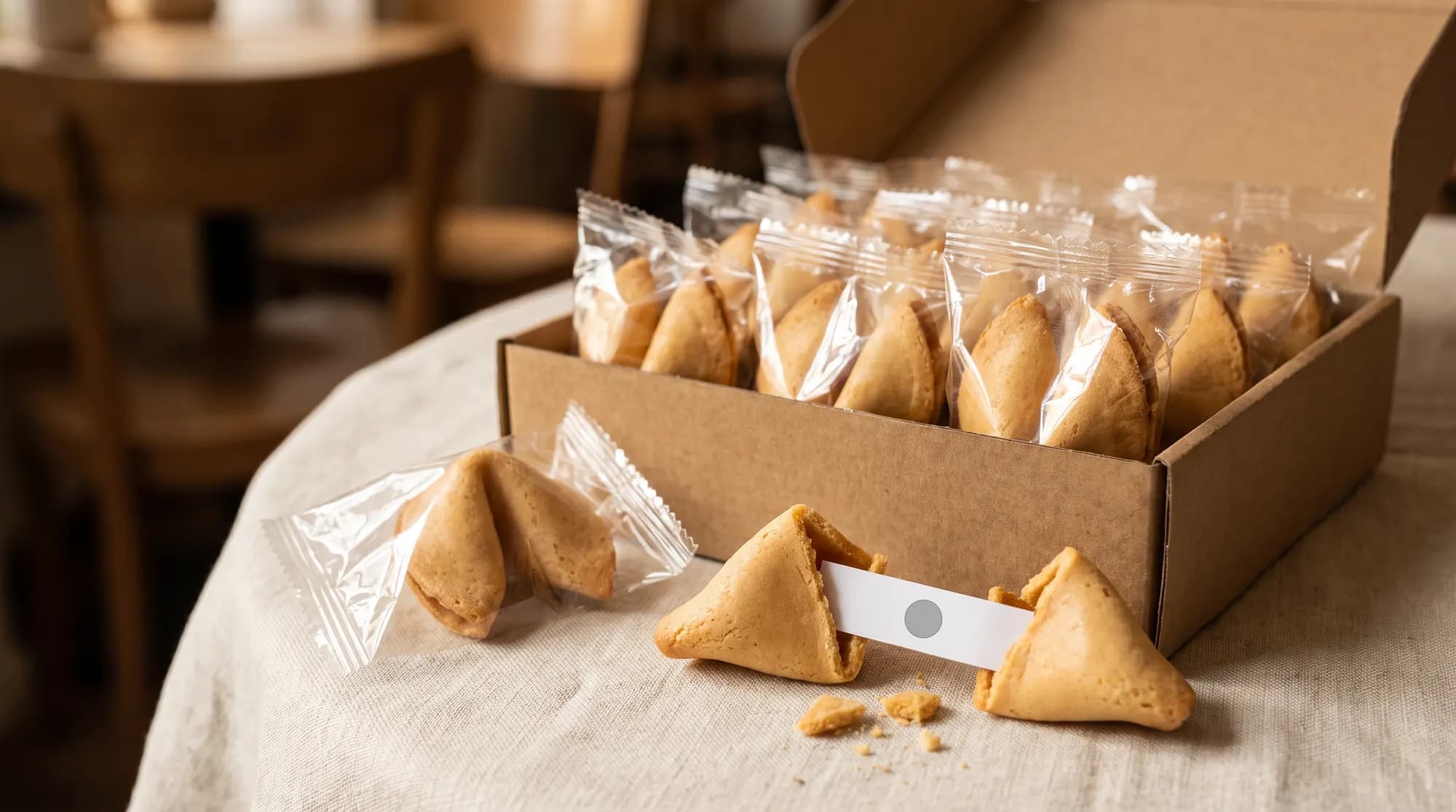
- A fortune cookie served with the bill. The guest breaks the cookie, reads the fortune and finds a brand offer with a QR code below it. It's a surprise delivered by the staff themselves, with no one being stopped in the street.
- A cup sleeve with a puzzle. A language school prints "How would you say this in Italian?" on a sleeve, and the answer and a trial lesson wait behind the QR code.
- A book swap corner with bookmarks. A bookshop leaves a few books in a café, each with a bookmark carrying a discount code.
Today, take the turn you always walk past.
Code DETOUR.
A fortune like this pairs a bit of fun with a concrete invitation. Guidelines and dozens of samples are in our article on fortune cookie messages, and the difference between a promo gift and a campaign in venues is explained in custom fortune cookies: from promo gift to ad campaign.
With Fortuners, a brand doesn't have to find venues or negotiate permissions itself: we match restaurants and cafés to your target group, the venues approve the fortune text, and scans and redeemed codes are counted separately for each location. The whole process is described in How it works.
In residential neighbourhoods
- A bike repair point in a housing estate car park. On a Saturday morning, a bike shop pumps tyres and adjusts brakes, and leaves a card with a code for a full service. It needs consent from the housing community or property manager.
- A puzzle on the notice board. With the building management's consent: a poster with a children's brain-teaser, with the prize waiting at a nearby art studio.
- A plant swap. A florist hosts a Saturday plant swap for neighbours in its shop, and the invitation with a code for pots hangs on the estate notice board, with the management's consent.
Near office buildings
- Fifteen minutes of movement in the lobby. A pilates studio runs a short stretching session in an area chosen by the building manager and hands out class invitations with a code.
- A desk to try out. A coworking space sets up one "work here for an hour" desk in an office building's hall, with the manager's consent, and invites people to a free trial day.
- A lunchtime riddle. A bar on the ground floor of an office building adds a card with a question about the district to each lunch set, and the right answer earns a free coffee on the next visit.
Before you choose an idea, check that people from your target group really spend time in that place. An original stunt in the wrong spot will collect photos but won't bring in customers. If you'd like to find out which venues near you your customers already visit, get in touch.
Frequently asked questions
Is guerrilla marketing legal?
The idea of unconventional advertising is perfectly legal. The trouble starts with execution: posters, writing or drawings in public places without the manager's consent, littering, damaging property or pestering passers-by can be a petty offence or an act of unfair competition. The safe rule is to work only where the person who manages the space has agreed to the activity in writing, and to ask a lawyer when in doubt.
What are good guerrilla marketing ideas for a small business?
The best ones are small, surprising and close to your customers: a fortune cookie with an offer served with the bill in a partner café, a puzzle on a coffee cup sleeve, a short free class in an office lobby, or a neighbourhood treasure hunt that ends in your shop. Each needs the venue's consent and its own code, so you can count the customers it brings.
Is it guerrilla or guerilla marketing?
The standard spelling is guerrilla, with a double r, from the Spanish word for a small war. Guerilla with one r is a very common variant in searches and online articles, and both refer to the same idea.
How do you measure a guerrilla marketing campaign?
Give the activity its own QR code, discount code or password, separate for each location. Count scans, code redemptions and sales over a set period, not just photos and shares. Compare the result with a similar period without the activity, or with a similar location where it did not run.