Restaurant Marketing Ideas: 20 Ways to Promote Your Venue
Restaurant marketing ideas grouped by cost and effort: online, in your neighbourhood and through partnerships, plus a simple way to see what brings in guests.
7 min readFortuners Team
The restaurant marketing ideas that work best rest on three pillars: being easy to find online, being visible in your immediate neighbourhood and working with the businesses around you. You don't have to do everything at once. Three well-chosen activities a month, plus a simple way to check which ones actually bring in guests, will get you further than a long to-do list. Below you'll find 20 ideas rated by cost, effort and type of venue, a method for picking three for the coming weeks and a way to track results without complicated tools.
Before you spend anything: what needs to work in your venue
Marketing brings a guest in once. Whether they come back depends on what they find. Before you launch any promotion, check the basics.
Before you start promoting your restaurant
- Opening hours, address and menu match on Google, your website and your social media
- The menu can be read on a phone without zooming into a PDF
- You have at least a dozen up-to-date photos of dishes and the dining room
- Guests can book a table or order without calling, if that makes sense for your venue
- Your staff know about every promotion and know how to accept a discount code
- Your till has a separate button or discount for each promotion, so you can count redemptions
If you already have plenty of guests but the average bill is low, work on in-house sales first. You'll find ideas in our guide on how to increase restaurant sales.
20 restaurant marketing ideas at a glance
| No. | Idea | Cost | Time needed | Best for |
|---|---|---|---|---|
| 1 | A fully optimised Google Business Profile | low | a few hours to set up, then a little each week | every venue |
| 2 | A monthly food photo session in daylight | low | 2–3 hours a month | every venue |
| 3 | A QR code asking for reviews, with no reward | low | one-off setup | every venue |
| 4 | Short videos from the kitchen and dining room | low | high, ongoing | venues with character, cafés, bistros |
| 5 | Paid ads targeting a small radius | medium | medium | lunch spots, brunch, new venues |
| 6 | A website with a text menu and online booking | medium | one-off, then updates | dinner restaurants, special-occasion venues |
| 7 | Email or text updates for regulars who opted in | low | an hour a week | venues with returning guests |
| 8 | A window display and A-board with the dish of the day | low | a few minutes a day | venues on busy streets |
| 9 | Lunch tastings in nearby office buildings | medium | medium | lunch bars, bistros in business districts |
| 10 | Flyers with a code at selected spots | low | medium | new venues, venues with delivery |
| 11 | A neighbour card for local residents and workers | low | low | neighbourhood venues |
| 12 | A recurring theme night | medium | high | restaurants, bistros serving dinner |
| 13 | News for local portals and neighbourhood groups | low | low | new venues, menu changes |
| 14 | A stall at a local market or street festival | medium | high | venues whose food works "on the street" |
| 15 | Referral swaps with neighbouring businesses | low | low | every venue |
| 16 | A joint offer with a cinema or theatre | low | medium | evening restaurants |
| 17 | Working with a creator from your district | low or medium | medium | venues with photogenic food or interiors |
| 18 | A free treat for guests, paid for by a partner brand | none | minimal | venues with a high number of bills |
| 19 | A guest chef dinner with another venue | medium | high | chef-driven restaurants |
| 20 | Community meet-ups and workshops | low | medium | cafés, venues with a spare room |
Online restaurant marketing ideas (1–7)
1. A fully optimised Google Business Profile. Primary and secondary categories, opening hours including public holidays, menu, attributes (outdoor seating, vegan options, accessibility), photos and posts about what's new. This is the first place people nearby check before they visit.
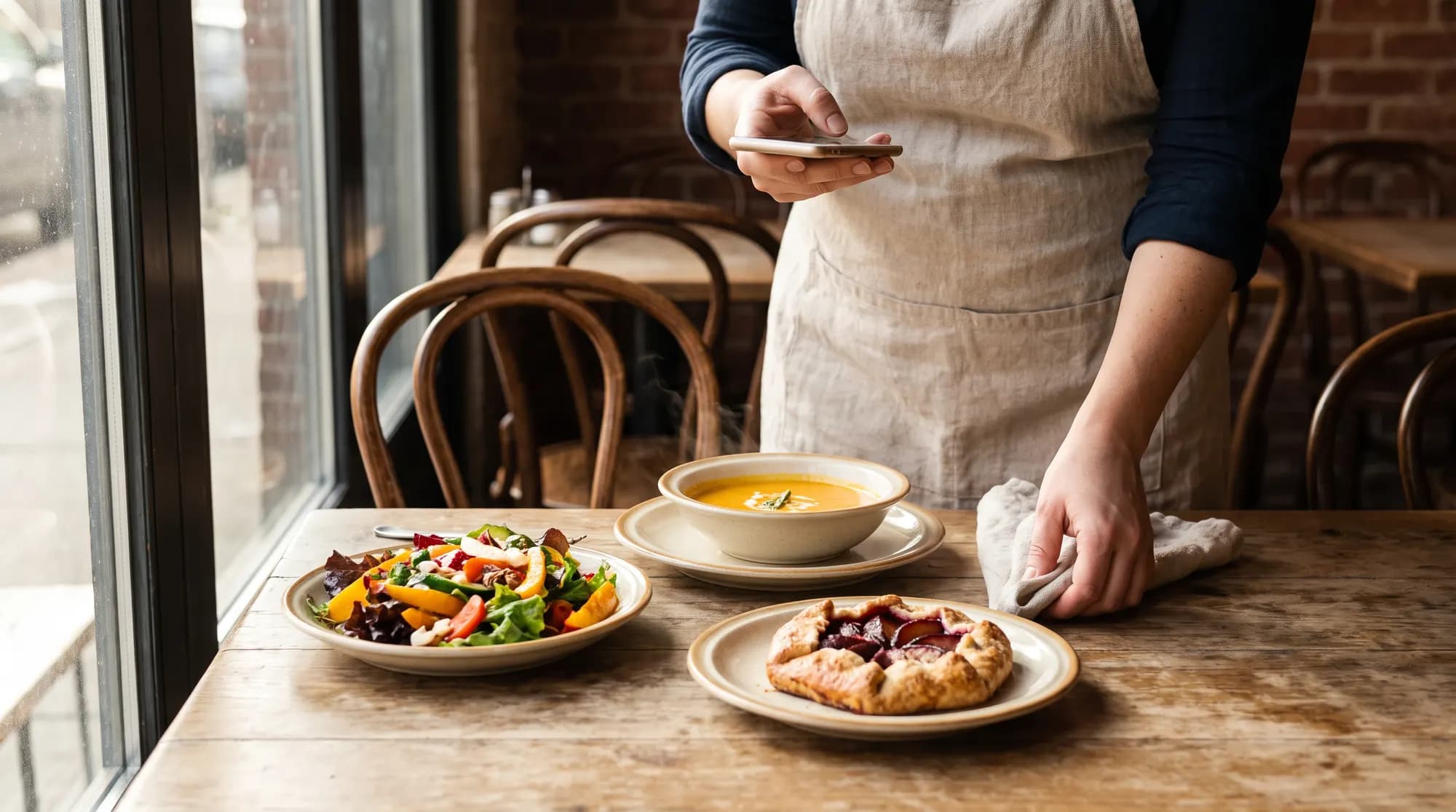
2. A monthly food photo session. Once a month, photograph new dishes and your best sellers by the window in daylight, from above and at an angle. You'll use the same shots on your profile, in the menu and in social posts.
3. Ask for reviews, without a reward. Put a QR code on the bill or the table that opens your Google review form directly. Ask every guest, not only the happy ones. Google's policies (opens in a new tab) explicitly prohibit offering discounts or free goods in exchange for reviews. Since 2023, Polish consumer law has also treated posting or commissioning fake reviews as an unfair commercial practice. For a step-by-step setup, see our guide to creating a QR code for Google reviews.
4. Short videos from the kitchen and dining room. Pick two or three repeatable formats, such as "dish of the week in 20 seconds" or "the morning before we open". Fixed formats are much easier to keep up than inventing something new every week.
5. Paid ads targeting a small radius. A Meta or Google campaign set to a few kilometres around your venue and one specific occasion: weekday lunch, weekend brunch, a new menu. Start with a small test budget and a dedicated code in the ad.
6. A website with a text menu. A menu published as text, not just a PDF, is readable on a phone and easier for search engines to find. Add online booking and keep prices up to date.
7. Email or text updates for regulars. A short message about a new menu or an event, sent only to people who have agreed to receive it. It works well alongside a loyalty programme.
Neighbourhood restaurant promotion ideas: 7 offline tactics (8–14)
8. A window display and A-board with the dish of the day. One specific message instead of the whole menu: soup of the day, a lunch set, a seasonal dessert. Change it regularly so passers-by have a reason to look.
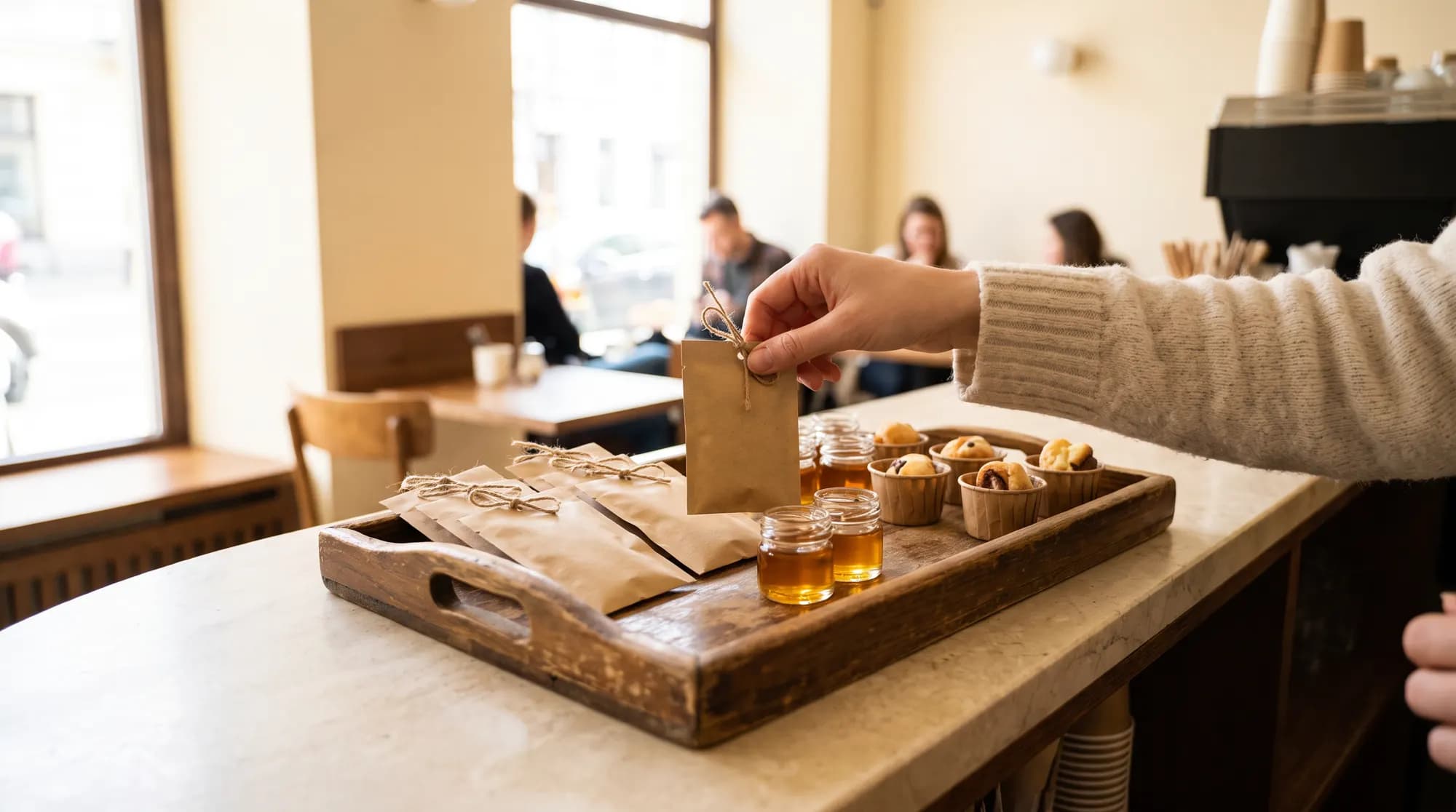
9. Lunch tastings in nearby office buildings. Arrange it with the building's reception or management, bring small portions and a flyer with a code for a first lunch. Because you count code redemptions, you'll know straight away whether it paid off.
10. Flyers with a code at selected spots. Leave them only where someone has agreed to it: a hotel reception, a coworking space, the shop next door. Posters and notices put up in public places not meant for them, or displayed elsewhere without the manager's consent, can get you fined under Poland's Code of Petty Offences.
11. A neighbour card. A small, permanent perk for people who live or work nearby, such as a free coffee with lunch. It builds a habit rather than a one-off spike in footfall.
12. A recurring theme night. Food from one region, a dinner built around a seasonal ingredient, live music. A fixed slot, such as every other Thursday, is easier to remember than a one-off event.
13. News for local portals and neighbourhood groups. An opening, a new menu or an event is a good story for local news sites and residents' groups on social media. Write like a neighbour rather than an advertising department, and respect each group's rules.
14. A stall at a local market or street festival. Small portions of your signature dish and a code for a first visit to the venue. This works best when your food travels well outside the dining room.
Restaurant partnership and event ideas (15–20)
15. Referral swaps with neighbouring businesses. The gym, hotel, florist or travel agent next door recommends you, and you recommend them. The easiest start is swapping materials with codes and checking after a month who sent whom.
16. A joint offer with a cinema or theatre. Dinner before the film or show, with a code honoured in both places. Both sides win guests who are already planning a night out.
17. Working with a creator from your district. A local creator may have a large audience in your area. Check this before you agree anything by asking for their audience location statistics. Remember that content produced as part of a paid collaboration must be clearly labelled as advertising.
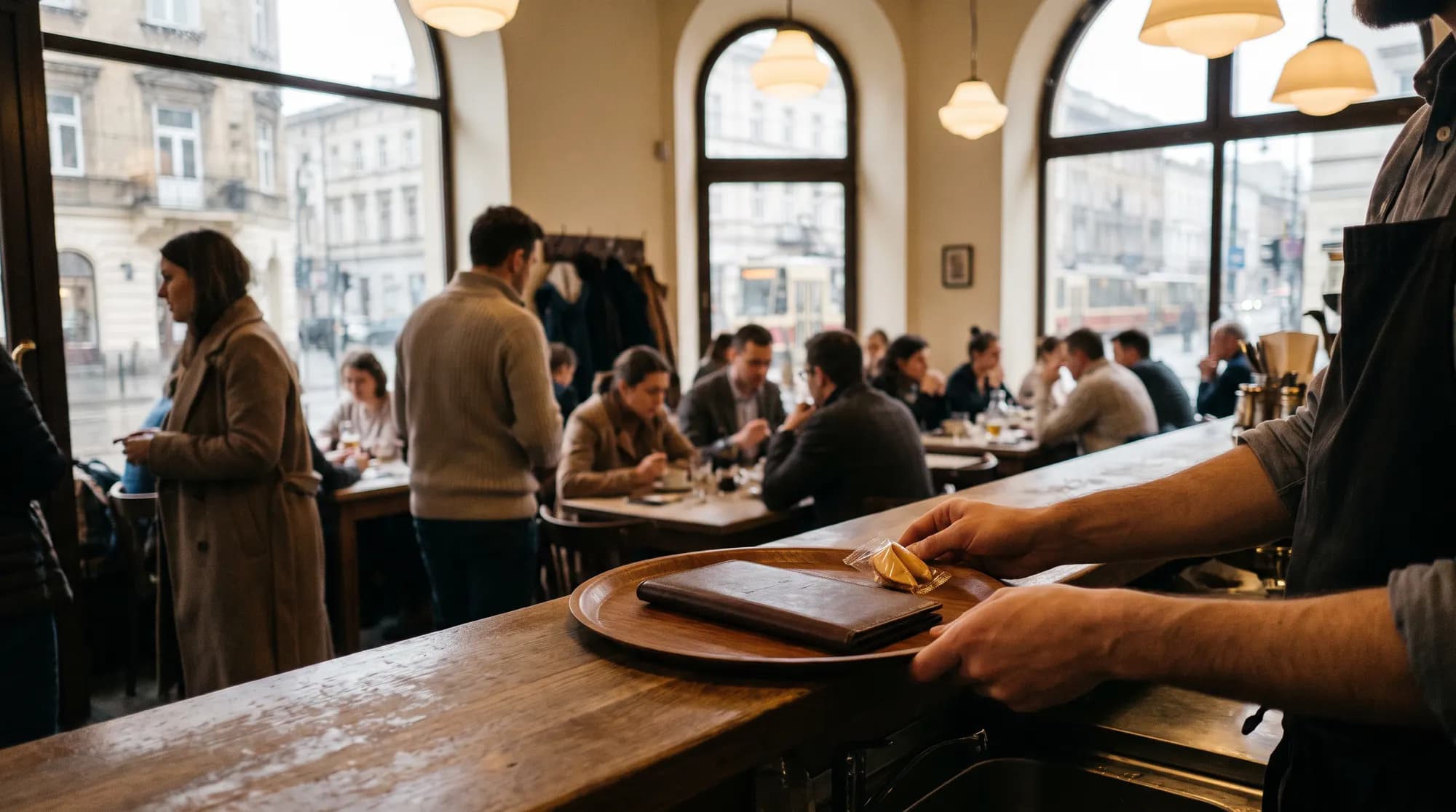
18. A free treat for guests, paid for by a partner brand. A brand that wants to reach your guests covers the cost of a small gift. That's how Fortuners works: your venue receives fortune cookies free of charge, your staff serve them with the bill, and inside each cookie guests find a fortune and an offer from a brand matched to your venue. You approve every brand before launch, and competing restaurants and cafés, alcohol, gambling and politics are always off the table.
An example slip (the brand and the offer are illustrative):
This weekend will give you a story to tell your friends.
19. A guest chef dinner. A joint menu with a chef from another venue brings in guests from both places. It takes planning, but it gives you a natural story for local media and neighbourhood groups.
20. Community meet-ups. A book club, a workshop with the tea shop down the road, a conversation evening run by a language school. A room that would otherwise stand empty on a quiet weekday starts earning its keep.
How to pick 3 ideas for the next month
Choose one idea from each group: one online, one in your neighbourhood, one partnership. Then score each candidate from 1 to 3 on four criteria and add up the points.
| Criterion | 1 point | 3 points |
|---|---|---|
| Fit with your guests | appeals to a few | hits your main guest group |
| Staff time | takes many hours | fits into a normal week |
| Cost | needs a clear budget | mostly costs time |
| Measurability | the effect is hard to count | has a code or a clear counter |
Example (hypothetical venues): a lunch bistro in Wola picks a fully optimised Google Business Profile, a tasting in the office building next door with a code for a first lunch, and a free treat paid for by a partner brand. A café in Saska Kępa picks a monthly photo session, a window display with the cake of the day and a referral swap with a nearby yoga studio.
Keep the monthly plan simple: the first week for preparing materials and codes, the next three for running the activities, and the last day of the month for reviewing results and deciding what stays. If you'd like to see the same challenge from the other side, meaning how brands choose venues for their campaigns, read our guide to advertising in restaurants.
How to tell which ideas brought guests in
You don't need an analytics system. Three habits are enough.
A separate code for every activity. The office tasting gets a different code from the hotel flyer. At the till, each code is its own discount or button, so after a month you can read the number of redemptions straight from your sales report.
Bookings and actions from your Google Business Profile. Your profile's performance data shows views, direction requests and website clicks, among other things. Tag the website link on your profile with UTM parameters, such as ?utm_source=google&utm_medium=business-profile, and your analytics will show how many website visits and online bookings started there.
A question from your staff. On a first visit, staff ask: "Is this your first time with us? How did you hear about us?" They mark the answer with a tick on a simple sheet behind the bar.
| Week | Social media | Friend's recommendation | Promotion with a code | Walked past | Other | |
|---|---|---|---|---|---|---|
| 1 | … | … | … | … | … | … |
| 2 | … | … | … | … | … | … |
After a month, put the three sources side by side: code redemptions, profile data and guests' answers. Any activity that doesn't show up in any of them should make way for the next idea on the list.
Frequently asked questions
Where should a new restaurant start with marketing?
Start with a complete Google Business Profile, good photos of your dishes and a menu that's easy to read on a phone. Only once guests can easily find you and check what you serve is it worth adding neighbourhood activities and partnerships with nearby businesses.
Can I offer a discount or a free dessert in exchange for a Google review?
No. Google's policies prohibit offering money, discounts or free goods in exchange for reviews. You can ask every guest for a review, but without a reward and without picking only the happy ones.
How do I promote a restaurant that serves alcohol in Poland?
Promote the food, the atmosphere and your events. In Poland, advertising and promoting alcoholic drinks other than beer is banned, and beer advertising is subject to additional conditions. The law exempts activity on the premises of venues selling alcohol for consumption on site, but not restaurant ads online, on flyers or in print. If you're unsure about a specific campaign, have it checked by a lawyer.
How much does restaurant marketing cost?
It depends on what you choose. Many effective ideas, such as a well-kept Google profile, food photos, asking for reviews or partnering with neighbours, mostly cost time. Start paid campaigns with a small test budget and only scale up where you can see guests arriving with the campaign's code.