
Advertising in Restaurants: A Guide for Non-Restaurant Brands
Advertising in restaurants for brands outside hospitality: in-venue formats, matching venues to your audience, approval rules, logistics and measurement.
16 min readFortuners Team
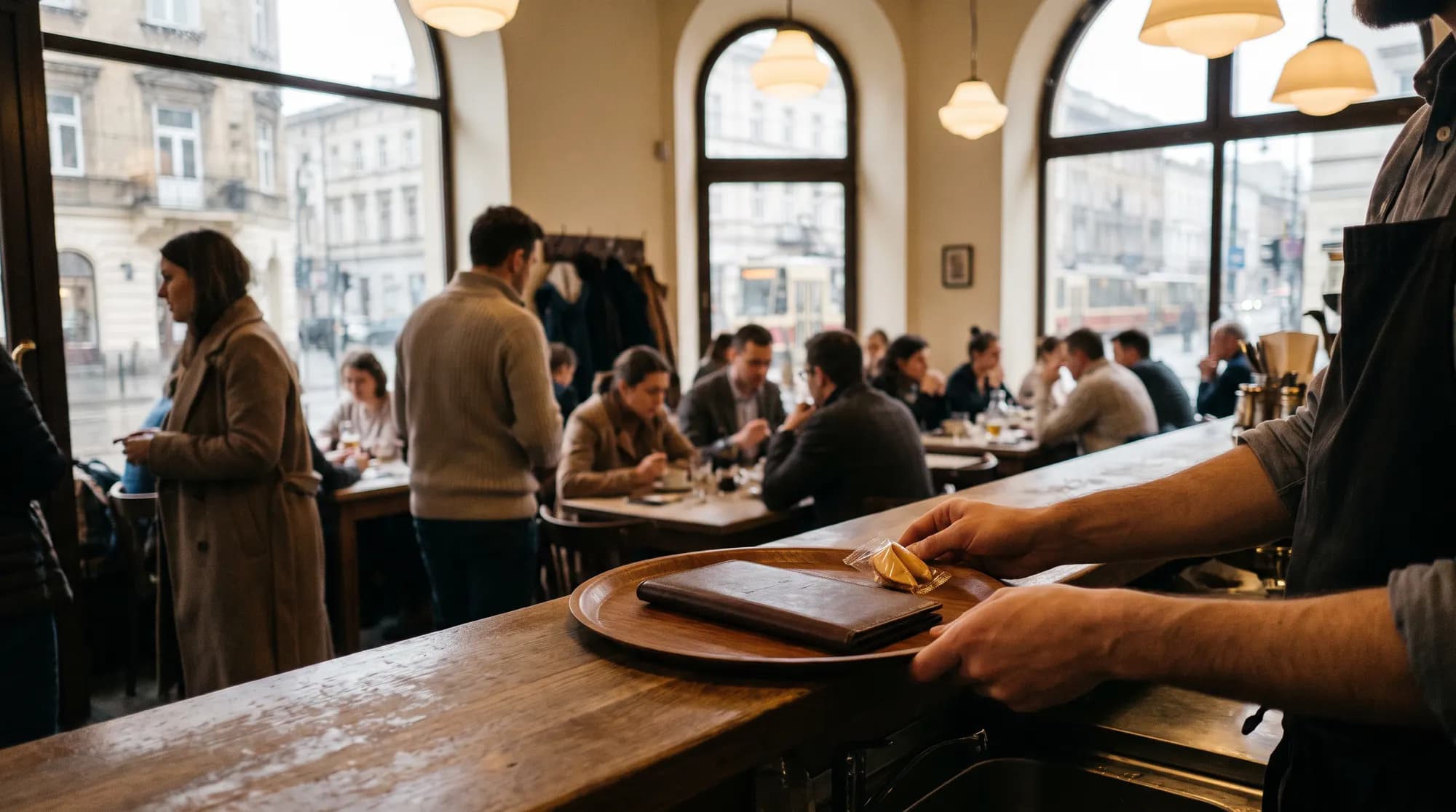
Advertising in restaurants lets a brand that isn't a restaurant reach people inside specific restaurants, cafés and bars: through placemats, table tents, screens, product sampling or a fortune cookie served with the bill. It is place-based media with an unusually well-defined audience, and it works when four conditions are met. You pick venues your customers actually visit. The venue approves your content. You plan deliveries so materials don't run out mid-campaign. You measure results with a separate code for every venue instead of guessing.
This guide covers the whole process from the brand's side: a fitness studio, a cinema, a language school, an app or a local service. The examples are set in Warsaw, where Fortuners runs its campaigns, but the method works in any city. If you run a venue and want to promote it, our guide on how to increase restaurant sales is a better fit.
HoReCa: what the channel is and why non-restaurant brands advertise there
HoReCa is short for Hotels, Restaurants, Cafés (the last part is sometimes expanded as Catering). It covers places where food and drinks are consumed on the premises: restaurants, cafés, bars, bistros, hotels and canteens. The trade also talks about on-trade, meaning sales for consumption on site, and off-trade, meaning sales in shops for consumption elsewhere.
The channel is usually associated with coffee, drinks and food producers competing for a spot on the menu or behind the bar. A brand from outside hospitality sees a venue differently: not as a point of sale, but as a place where its potential customers already gather. A pilates studio is looking for health-conscious people, a coworking space for staff from nearby offices, an arthouse cinema for couples who enjoy evenings out.
What sets a restaurant or café apart from other local media:
- Known context. You know the district, the time and the kind of place. A brunch spot in Saska Kępa and a lunch bar by the office towers in Wola attract two different audiences, even though only a few kilometres separate them.
- Time and attention. Guests are seated, waiting for their order or the bill. They don't pass your message on the move, like a roadside billboard.
- Physical contact. The material sits on the table or ends up in a guest's hand. It can't be blocked or scrolled past.
- Proximity. Venues are usually close to where guests live or work, so a local studio, shop or service is genuinely within reach.
The downside is effort: each venue means a separate conversation, a separate delivery and a separate risk that your material disappears under a stack of menus. Much of this guide deals with exactly that.
The moment in the venue: when guests are open to a message
A restaurant visit has a rhythm. The same message helps at one moment and gets in the way at another. Before you choose a format, map out the visit stage by stage.
| Stage of the visit | What the guest is doing | Formats that fit | Risk |
|---|---|---|---|
| Arriving and waiting for a table | looking around, sometimes impatient | poster or screen by the entrance, material at the counter | short contact, attention on the staff |
| Ordering | reading the menu, talking to the waiter | menu insert, table tent | competes with choosing a dish, venues rarely agree |
| Waiting for food | talking, looking at the table and their phone | placemat, table tent, napkin, coaster | easy to overlook, material gets dirty |
| Eating | eating and talking | in practice, none | advertising is intrusive, and the venue doesn't want it |
| Bill and payment | waiting, reaching for a card or phone | material served with the bill, such as a fortune cookie | low, if the material is small and pleasant |
| Leaving | getting ready to go | flyer by the door, takeaway sample | most guests won't pick anything up |
This gives you a simple rule: a brand message should round off the visit, not interrupt it. After the meal, guests are relaxed, the conversation slows down, and at the moment of payment many of them are holding their phone anyway. A QR code at that point is a natural next step rather than an obstacle.
Advertising formats in restaurants and cafés
Below are the most common formats. The "Measurability" column shows whether you can link the contact to a specific customer action without guessing.
| Format | Where and when guests see it | Strengths | Limitations | Measurability |
|---|---|---|---|---|
| Paper placemats or tray liners | at the table, while waiting | large surface, room for detail | mainly suit self-service venues, end up in the bin quickly | medium: QR or code on the placemat |
| Printed napkins | at the table, during the meal | daily contact, easy for venues to accept | little space, napkins are for wiping hands, not reading | low |
| Table tents | at the table, throughout the visit | constant presence, easy to swap content | compete with the venue's own materials, get tucked away | medium: QR on the table tent |
| Coasters | at the table or bar, with drinks | long exposure in bars | a classic drinks format, and alcohol advertising is heavily restricted in Poland | low to medium |
| Screens in the venue | by the bar, counter or waiting area | moving image, no printing | not every venue has screens, contact is brief | low to medium |
| Bill folder inserts | at payment | reaches guests at the calmest moment | the venue must use folders and agree to inserts | medium: QR on the insert |
| Product sampling | at the table or counter | guests try the product, not just the message | needs staff or promoters, only suits products you can taste or test | medium: code attached to the sample |
| Flyers and cards by the till | at payment or when leaving | cheap to produce | guests have to reach for them, often among other flyers | medium: code on the flyer |
| Takeaway cups, sleeves and bags | outside the venue, on the go | the message goes out onto the street | the venue has to change its own packaging, high production threshold | low to medium |
| Fortune cookie served with the bill | at payment, at the end of the visit | lands in the guest's hand, one brand per cookie, a treat rather than a classic ad | needs deliveries and restocking, little room for copy | high: QR and discount code per venue |
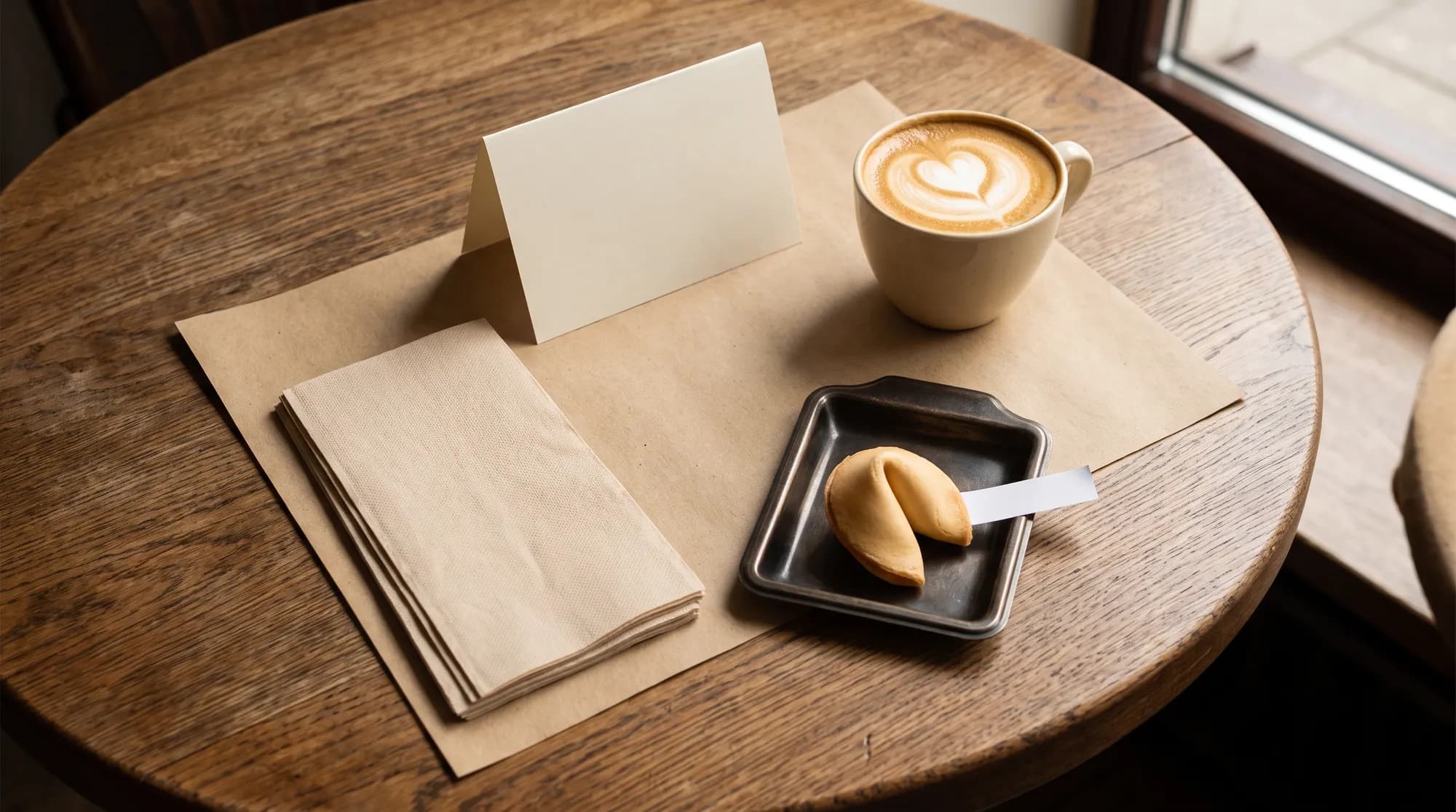
Table advertising and screens
Restaurant table advertising is the most obvious choice, and also the one venues with table service turn down most often. The table belongs to the guest and the restaurant, and any outside material has to fit next to the menu, condiments, phones and plates. Placemats work in self-service bars and canteens, where paper on a tray is standard. A table tent makes sense if the venue already uses them and you take one side, leaving the other to the restaurant. Coasters are mostly a bar format, so they suit non-alcohol brands in bars with a matching crowd. Screens give you flexibility, but a code on a screen has to stay visible long enough, and be large enough, for a phone to read it from where the guest sits.
Product sampling
Sampling makes sense when people need to try a product before they buy it: a drink, a snack, a cosmetic with a distinctive scent. It requires trained venue staff or your own people on site, and food samples also need ingredients and allergen information. We explain how to organise and measure it in our guide to product sampling in restaurants and cafés.
A fortune cookie served with the bill
This format combines physical contact with the best moment of the visit. Staff add a cookie to the bill, the guest opens it, reads the fortune and finds the brand's offer and a QR code below it. It feels more like a small dessert with a message than a classic ad, which tends to make it an easier yes for venues than materials on the table. That's how Fortuners works: the brand tells us who it wants to reach, and choosing venues, writing the copy, producing the cookies, deliveries and measurement are on our side. More about the format itself in our article on custom fortune cookies as an ad campaign.
Here is an example fortune for a coworking space handing out cookies in lunch bars next to office buildings:
This week’s best idea will come to you away from your desk.
The fortune picks up on the guest's situation: a break from work. The offer suggests what to do about it. And the location, a bar a few hundred metres from the coworking space, means the message reaches someone who could take up the offer this week. The coworking space in this example is fictional.
How to match venues to your target audience
The most common mistake in restaurant advertising is choosing venues by popularity. A trendy place with heavy footfall won't help if its guests have no reason to use your offer or live on the other side of the city. Use five criteria instead.
- District and travel time. Mark out the area from which customers can realistically reach you, for example 15 to 20 minutes on foot, by bike or by public transport. Venues outside it drop off the list, unless you sell online.
- Cuisine and concept. A specialty coffee shop, a vegan bistro, a sushi bar, a family pizzeria, a traditional milk bar (bar mleczny). The concept says more about guests' habits and values than demographics do.
- Price level. The average bill shows what guests are prepared to spend. A premium offer in a bar selling cheap set lunches and a small coupon in a fine dining restaurant are two sides of the same mismatch.
- Time of day. Breakfast and brunch, weekday lunch, dinner, weekends. One venue can host office workers in the morning and couples in the evening.
- Type of visit. A quick meal during a break, drinks with friends, a family lunch, a date. This shapes what guests will be in the mood for once they leave.
Example matches between brands and venues (illustrative scenarios):
| Brand | Venue profile | Why |
|---|---|---|
| Pilates studio | matcha cafés and breakfast bars within 20 minutes | guests who already look after their health and live or work nearby |
| Coworking space | lunch bars next to office buildings in the same district | office workers mid-day, a few hundred metres from the space |
| Arthouse cinema | restaurants people choose for dinner for two | people enjoying an evening out who plan the next one |
| Language school | cafés near universities and in business districts | people who are studying or building their careers |
| Local services app | bistros and cafés where the service operates | smartphone users in the service area, one scan from the download |
We walk through the first three scenarios in the campaign examples section of our home page. For ideas across ten industries, see our marketing campaign examples for local brands.
How many venues and how many materials you need
Work out the number of venues from your goal, not from your print budget. A simple spreadsheet is enough.
Illustrative example (all figures are assumptions for your own spreadsheet, not market data):
- a venue issues an average of 120 bills a day, the campaign runs for 4 weeks, and the venue is open 6 days a week: 120 × 24 = 2,880 bills,
- across 6 venues, that's 17,280 bills at which a guest could receive your material,
- if you assume 3 in 100 guests scan the code and one in three of them takes up the offer, you get about 518 scans and 173 customers,
- if that doesn't justify the campaign, change the assumptions (more venues, a longer run, a stronger offer) rather than hoping for luck.
The actual scan rate depends on the offer, the venue and the format, so treat your first campaign as a test of these assumptions. Get the number of bills from the venue instead of estimating it from outside.
Working with venues: approval, rules and what restaurants won't accept
A restaurant isn't a media space you simply buy. It's a business with its own brand, regular guests and busy staff. Look at your proposal through the owner's eyes. They will ask four questions.
- Does this suit my guests? Advertising that irritates guests hurts the venue, not the brand.
- Does it compete with what I sell? No venue will promote another restaurant, café or food delivery service.
- How much extra work is it for my staff? Every extra sentence, form or box to move is a cost.
- Am I in control? The owner wants to see the brand and copy before launch and be able to stop.
What restaurants usually won't accept
- promotion of competing food and drink venues, or services that draw guests away from their menu,
- alcohol, gambling and political content,
- controversial or suggestive content that could offend some guests,
- materials that take up space on tables, in the cold room or in the back,
- mechanics that require waiters to explain a promotion, collect data or take sign-ups.
At Fortuners, the venue-side rules are public on our page for restaurants: competing restaurants and cafés, alcohol, gambling and politics are excluded, and the venue sees the brand, the fortune and the offer before launch and can say no or end the partnership at any time. For a brand, that's good news: once the copy is approved, the venue has no reason to hide the material.
What to prepare for venue approval
- The brand name and one sentence about what it does
- The exact message and offer in the version guests will see
- Offer terms: validity, limits and where it can be redeemed
- Campaign dates and the expected number of materials per week
- Dimensions of the materials and how they need to be stored
- Ingredients and allergens, if the material is a food product
- A contact person the venue can message when stock runs low
- A clear statement that the venue can end the partnership
Exclusivity and other brands in the same venue
Ask what other advertising will be in the venue at the same time, because your flyer next to three others becomes wallpaper. Aim for one campaign per category at a time. With a fortune cookie, the problem disappears: each cookie carries a single brand.
Categories with advertising restrictions in Polish venues
Some categories face statutory advertising and promotion restrictions in Poland, wherever the message appears. If you're an international brand, don't assume the rules match your home market. This overview helps you spot the risk but doesn't replace legal advice: check the details, exceptions and current wording of the law with a lawyer before you plan a campaign.
- Alcohol. The Act on Upbringing in Sobriety and Counteracting Alcoholism generally prohibits advertising and promotion of alcoholic drinks. The exceptions, including one for beer, come with detailed conditions. The act's definition of promotion also covers public tastings, so sampling alcohol in a venue calls for particular caution.
- Tobacco products and e-cigarettes. Polish tobacco control law introduces a broad ban on advertising and promoting these products.
- Healthcare and veterinary services. The Act on Medical Activity, and a separate act for veterinary treatment establishments, allow providers to inform the public about their services, but not in a form that has the characteristics of advertising. Separate rules cover advertising medicines (the Pharmaceutical Law) and health claims for food supplements.
- Gambling. The Gambling Act restricts advertising and promotion of gambling.
- Personal data. If your QR code leads to a form, you're collecting personal data and have GDPR obligations: a privacy notice, collecting only the data you need, and a separate, voluntary consent for marketing emails or text messages.
- Language. Under the Polish Language Act, offers and information for consumers in Poland should generally be available in Polish. An English version can sit alongside it, which works well in districts with many international guests.
Promotion mechanics are a separate issue. If the reward depends on chance, for example "every tenth cookie wins", the activity may count as a promotional lottery, which requires a permit in Poland. It's safer to give every guest the same offer and vary only the message.
Campaign logistics: production, deliveries and restocking
Campaigns in venues rarely fail at the idea stage. They fail in week three, when half the venues have run out and the other half still have unopened boxes in the back. Plan logistics as carefully as the content.
| Stage | What happens | Owner |
|---|---|---|
| Preparation | brief, goal, offer, venue shortlist | brand |
| Copy and design | message, offer, QR code, landing page | brand or campaign organiser |
| Approval | venues approve the brand and copy, the brand approves the design | venues and brand |
| Production | printing, packing, batch quality control | organiser or manufacturer |
| Launch | launch delivery, a short briefing for staff | organiser |
| Campaign run | restocks, stock checks, review of results | organiser and brand |
| Wrap-up | collection of leftovers and stands, final report | organiser and brand |
Treat this as a template, not standard lead times. Production time depends on the format, print run and supplier, so confirm it before you fix a launch date.
- Launch quantity depends on the number of bills. Ask the venue what a typical day looks like and add a buffer for weekends.
- Restocks should follow a fixed rhythm, such as weekly, with an emergency route: the venue sends one message and a delivery arrives quickly.
- Storage. Materials must not take up space in the cold room or on work surfaces. Boxes need to fit on a shelf.
- Food. A food product needs labelling in line with Regulation (EU) No 1169/2011 (opens in a new tab) on food information to consumers, including ingredients and allergens, with mandatory information in Polish, plus a suitable shelf life.
- Staff. The best instruction for a waiter fits in one sentence. With fortune cookies, it's "add a cookie to the bill".
Measuring advertising in restaurants
In-venue advertising has a reputation as a channel you can't measure. That's only true when the material doesn't lead to any action. All you need is a trace customers leave along the way.
| Stage | Metric | Data source |
|---|---|---|
| Contact | materials handed out in each venue | stock levels and deliveries |
| Interest | QR code scans, total and unique | redirect counter or campaign dashboard |
| Action | form submissions, bookings, app downloads | landing page |
| Sales | redeemed discount codes | till, booking system, online shop |
| Cost | cost per scan and per customer | campaign budget divided by the result |
How to set it up:
- A separate QR code for each venue. One code for the whole campaign tells you how many people scanned; a code per venue tells you which places work.
- A discount code to redeem the offer. A scan signals interest; a code entered at the till signals a customer. If you're worried about coupon sites, use single-use codes or a short validity period.
- A landing page built for phones. It has to load fast and show the offer immediately, with no login and nothing to install.
- A baseline. Note how many new customers you had in the same period before the campaign, and compare venues with each other. A busy venue with a low scan rate suggests the message doesn't suit its guests.
- Reviews during the campaign. After the first week you can see which venues lag behind and move stock to where it works.
In a Fortuners campaign, the brand tracks this in the partner dashboard: daily scans, results for each venue on a map, redeemed codes and stock levels, plus a PDF report at the end.
Illustrative customer acquisition cost (made-up figures, continuing the spreadsheet above): if 17,280 bills across 6 venues produced 518 scans and 173 redeemed codes, customer acquisition cost = campaign budget ÷ 173. Compare that with the cost per customer in channels you already use, and with what a customer spends with you in their first year. We explain the full method in our guide to offline marketing attribution.
Common measurement pitfalls:
- counting scans only, without checking how many ended in a purchase,
- ignoring unique scans, so one person scanning three times inflates the result,
- one discount code for every channel, so you can't tell a venue customer from an Instagram or referral customer,
- a campaign that's too short, ending before customers have had time to use the offer.
A 6-step plan for advertising in restaurants
- Set a goal and one action. A trial class booking, an app download, a cinema booking. One campaign, one action, one metric.
- Describe your customer and translate that into venues. Mark out the area on a map, then choose venues by district, cuisine, price level and time of day.
- Choose a format and write the copy. Keep the moment of the visit in mind. The message should speak to the guest's situation, and the offer should give a reason to scan right away.
- Check the rules. Legal restrictions for your category, venue policies, language requirements and GDPR if you collect data.
- Plan production and deliveries. Launch quantity, restock rhythm, and who is responsible for stock and for collecting leftovers.
- Measure and decide. Check results by venue after a week and calculate customer acquisition cost after the campaign. Keep the venues that worked and replace the rest.
If you'd like to work through this plan with a team that handles venue selection, copy, cookie production, deliveries and measurement, get in touch. We'll show you what a campaign for your brand could look like and which venues are worth starting with.
Frequently asked questions
What is the HoReCa channel?
HoReCa stands for Hotels, Restaurants, Cafés. It covers hotels, restaurants, cafés, bars and other places where food and drinks are consumed on the premises. In the drinks and food trade this is also called on-trade, as opposed to off-trade, meaning sales in shops for consumption elsewhere.
Which brands can advertise in restaurants and cafés?
The easiest fit is brands that do not compete with the venue and suit its guests: fitness and wellness, cinemas and culture, schools, coworking spaces, apps and local services. In Poland, statutory restrictions apply to alcohol, tobacco products, gambling, healthcare services and veterinary services, among others, and venues often have rules that are stricter than the law.
Does a restaurant have to approve the ad content?
In practice, yes. The venue answers to its guests for everything that lands on the table, so before launch it should see the brand, the message and the offer. In Fortuners campaigns, the venue approves every brand and every fortune, and it can end the partnership at any time.
How do you measure advertising in restaurants?
Give each venue its own QR code and add a discount code that customers use when they buy. That way you can count materials handed out, scans, redeemed codes and customer acquisition cost for each venue separately, not just for the campaign as a whole.
Can an international brand advertise in Polish restaurants in English?
An English version can work well in districts with many international guests, but consumer-facing offers in Poland should generally also be available in Polish under the Polish Language Act. Plan a Polish version first, add English alongside it, and check the details for your campaign with a lawyer.