
How to Increase Restaurant Sales: The Complete Guide
How to increase restaurant sales with three levers (guest count, average check, visit frequency), a one-week diagnosis and a 90-day plan with clear metrics.
5 min readFortuners Team
To increase restaurant sales, work on three numbers: how many guests come in, how much each of them spends and how often they come back. Almost every tip you will find (menu engineering, upselling, loyalty cards, happy hours, local marketing) moves one of those three levers. So before you pick from a list of twenty ideas, find out which lever is weakest in your venue and fix that first. This guide walks you through a one-week diagnosis based on your POS reports, practical actions for each lever, ways to fill quiet hours and a 90-day plan with metrics you can track without an analyst.
The restaurant sales formula: guests × average check × frequency
Every złoty in your till can be broken down into three factors:
Monthly sales = number of different guests × average visits per guest × average spend per guest
In practice your POS system does not know how many different guests you have. It knows how many bills you rang up and, if your staff enter the party size, how many covers you served. You can estimate visit frequency from loyalty program data, stamp cards or a short guest survey. It does not have to be precise. It has to be measured the same way every time.
Why does this split matter? Because each lever needs different tools. More guests means visibility and recommendations. A higher check means menu design and service. More frequent visits means loyalty and reasons to return. An idea from the wrong category can be good in itself and still fail to solve your actual problem.
Illustrative example: +5% on each lever
The figures below are made up and serve only as an illustration. Imagine a venue with 1,500 different guests a month, each visiting 1.6 times on average, with an average spend of PLN 60 per guest.
| Scenario | Guests | Visits per guest | Spend per guest | Monthly sales |
|---|---|---|---|---|
| Starting point | 1,500 | 1.6 | PLN 60 | PLN 144,000 |
| +15% on the check only | 1,500 | 1.6 | PLN 69 | PLN 165,600 |
| +5% on every lever | 1,575 | 1.68 | PLN 63 | PLN 166,698 |
A 5% gain on each of the three levers adds up to about 15.8% more sales, because 1.05 × 1.05 × 1.05 ≈ 1.158. That beats a 15% jump in the check alone and is usually easier to achieve. Getting every guest to spend 15% more is a big change in behaviour. Five percent in three places is a handful of smaller, calmer steps.
One-week diagnosis: where your restaurant is losing sales
Before you change anything, spend a week collecting facts. Most of the data is already in your POS system. Pull reports for the last 8–12 weeks so that one unusual weekend does not skew the picture.
Day 1. Sales over time. Export sales by day of the week and hour. Build a simple grid: hours in the rows, days in the columns, average sales in each cell. Peaks and gaps jump out straight away, for example Tuesday between 3 pm and 6 pm.
Day 2. Guests and checks. Count bills, covers and the average check, ideally both per bill and per guest. If the number of bills is flat but the average check is falling, the problem is inside the dining room, not out on the street.
Day 3. The menu. Pull the item sales report: units sold, revenue and share of sales. Put it next to the cost of each portion. That gives you a menu engineering matrix, which sorts dishes into four groups:
- stars: popular and profitable. Keep them and give them the best spot on the menu,
- plowhorses: popular but low-margin. Look for a better margin, for example a different portion or side,
- puzzles: profitable but rarely ordered. They need a better description, a better position or a staff recommendation,
- dogs: neither popular nor profitable. Candidates for removal.
Day 4. Service. Check the average check and the share of bills with a dessert or drink for each member of the front-of-house team. This is not about rankings or penalties. Big differences between servers show that some of your team do something the rest can learn.
Day 5. Visibility. Open the performance stats in your Google Business Profile: how many people saw your listing, asked for directions or clicked through to your website. Read the reviews from the last three months and list the topics that keep coming up: waiting times, portion sizes, noise, service.
Day 6. Watch the dining room. Sit in as a guest during a peak and an off-peak hour, or ask a friend to do it. Time how long it takes from walking in to getting a menu, from ordering to the food arriving and from asking for the bill to paying. Note whether anyone suggested dessert or coffee.
Day 7. Conclusions. Match the symptoms to the levers:
| What the data shows | Weakest lever | First action |
|---|---|---|
| Few bills outside weekends, empty afternoons | Guest count | An offer for quiet hours, local visibility |
| Full dining room but low spend per guest | Average check | Menu layout, staff recommendations, desserts and drinks |
| Lots of new faces, few regulars | Frequency | Loyalty program, a reason to come back |
| A drop after a run of poor reviews | Guest count | Fix the cause, reply to reviews |
| Big differences between servers | Average check | A short suggestive selling session |
More guests: local visibility and Google
Most restaurant guests live, work or spend time nearby. Before you pay for advertising, make sure the people who are already close by actually notice you and can find you.
Google Business Profile
Your listing on Google Maps is often the first contact someone has with your venue. Check that:
- your primary category describes you precisely (for example "Vietnamese restaurant" rather than just "restaurant"),
- your opening hours are up to date, including public holidays and long weekends,
- there are recent photos of the dining room, the food and the entrance,
- your menu is uploaded and matches what you actually serve,
- you reply to reviews, including negative ones, calmly and specifically.
Reviews: ask the way Google allows
Reviews shape the decision of people who do not know you yet. You are allowed to ask for them, and you should, but within the rules. Google's prohibited and restricted content policy for Maps (opens in a new tab) rules out, among other things:
- offering incentives (payment, discounts, free goods or services) in exchange for a review,
- discouraging negative reviews or selectively asking for positive ones, for example only asking guests who look happy,
- requiring or pressuring guests to leave a review while they are still on the premises.
The law adds its own layer. In Poland, as elsewhere in the EU, posting or commissioning fake consumer reviews is an unfair commercial practice. We cover where that line runs in our guide to word of mouth marketing offline.
In practice: ask every guest the same way, at a good moment (after payment, not mid-meal), and make it easy. How to set up the link, the QR code and a short script for your staff is explained in QR code for Google reviews.
Visibility from the street and the neighbourhood
- Window and entrance. Can a passer-by tell in two seconds what you serve and roughly what it costs? A menu by the door, a clear A-board with one dish of the day and good lighting in the evening do more than another social media post.
- Offices nearby. A lunch menu with a predictable serving time and an easy way to order for a whole team.
- Neighbouring businesses. A cinema, theatre, gym or coworking space. A joint "before the film" or "after training" offer brings both sides new customers.
- Delivery and takeaway. Delivery apps can reach people who would never walk past your door, but check how their commission affects the margin on each order before you treat that revenue as a win.
- Word of mouth. Guests talk about things that surprised them. Give them a reason: a small gesture at the end of the visit, a dish with a story, a treat for regulars.
A higher average check: menu design and suggestive selling
The healthiest growth in your average check comes from guests ordering more or ordering better, not just from higher prices. A price increase is sometimes necessary, but it does not change how guests behave and it can reduce how many of them come.
A menu that sells
- Stars in plain sight. Put your most profitable, best-loved dishes where the eye lands first: at the top of a section or in a highlighted box.
- Descriptions that build appetite. "Duck pierogi with roasted apple sauce" tells a guest far more than "meat dumplings".
- Add-ons written into the menu. Bread, an extra sauce, a side of vegetables, a larger size. Guests are more likely to choose something they can see than something they would have to ask about.
- Pairings. Next to a main course, suggest one specific soft drink or dessert that goes with it.
- Fewer items. An overlong menu slows decisions and complicates the kitchen. Remove the dogs from your menu matrix.
Suggestive selling without being pushy
"Anything else?" almost always gets "No, thanks." A specific suggestion gives the guest something to say yes to. A few lines your team can practise:
- "Guests often have our rosemary lemonade with this dish. Shall I bring you one?"
- "Today's dessert is a Basque cheesecake, baked this morning. Would you like me to save two slices for you?"
- "If you're having coffee, the seasonal fruit tart is lovely. It came out of the oven this morning."
The rules: one suggestion per stage of the visit (drink, starter, dessert, coffee), always a specific item, and no pressure after a no. The best moment to suggest dessert is when you clear the main course plates, not when you bring the bill.
More frequent visits: loyalty and reasons to come back
A guest who already knows you does not need advertising. They need a reason to come back sooner. This lever is easy to overlook, because you cannot see it in a single day's report.
- A loyalty program. A stamp card, points or a guest club. Each model has a different cost and puts different demands on your staff. We compare them in restaurant loyalty program models.
- An invitation to the next visit. A small card with the bill carrying an offer valid from next week, not from today. It does not lower today's check and it gives the guest a concrete reason to return.
- A rhythm people remember. A fixed day for the dish of the week, a monthly themed dinner, a seasonal menu. Regulars learn that "Thursday means something new".
- Staying in touch after the visit. A newsletter or a guest list for events. Collect consent in line with GDPR: a clear purpose, a genuinely free choice and an easy way to unsubscribe.
How can you measure frequency without an app? Work out what share of monthly bills involve a loyalty card, or once a quarter spend one week asking guests at payment: "Is this your first visit with us?" Keep a tally on a sheet by the till.
Quiet hours and slow days: how to fill them
An empty dining room at 4 pm on a Wednesday costs you the same rent as a full one on Saturday night. First decide whether you want to fill those hours or cut them, for example by opening later on days when the morning never picks up.
Ideas matched to the time of day:
| Time | Who might come | Idea |
|---|---|---|
| Weekday mornings | People on their way to work | Takeaway breakfast ready in a few minutes |
| Lunch | Office workers | A fixed lunch menu, team orders |
| 3 pm–6 pm | Parents with children, remote workers | Coffee and cake, a laptop-friendly corner |
| Monday–Wednesday evenings | Couples, groups of friends | Themed evening, tasting, quiz night |
| Before local events | Cinema, theatre and concert audiences | A short menu served within 45 minutes |
Promotions that don't destroy your margin
A percentage discount on the whole bill is the most expensive way to buy traffic, because guests who would have come anyway get it too. Compare two approaches.
Illustrative example (made-up figures): a PLN 100 bill with a 30% food cost, so PLN 70 is left after ingredients.
- 20% off the bill: the guest pays PLN 80, ingredients still cost PLN 30, PLN 50 is left. To earn as much on food as before the promotion, you need 40% more bills like this (70 ÷ 50 = 1.4).
- A free dessert with a main course, dessert food cost PLN 5: the guest pays PLN 100, ingredients cost PLN 35, PLN 65 is left. About 8% more bills is enough (70 ÷ 65 ≈ 1.08).
Rules for a safe promotion:
- One goal. For example "more guests on Tuesdays between 3 pm and 6 pm", not "more traffic".
- Add value instead of cutting the price. Something with a low food cost that guests value highly.
- Limit time and scope. Specific days, hours and items.
- Work out your break-even point before you start, as in the example above.
- Compare with the same days in weeks without the promotion.
- Communicate honestly. When you advertise a price reduction in Poland (and across the EU), price information rules apply, including showing the lowest price from the 30 days before the reduction. If you are unsure about a specific promotion, check it with a lawyer.
The guest experience and the end of the visit
Guests judge a visit as a whole, but they remember its best moment and its ending most vividly. Psychologists call this the peak-end rule. For a restaurant the lesson is practical: a long wait for the bill can overshadow a great dish, and a kind gesture on the way out stays with people for longer.
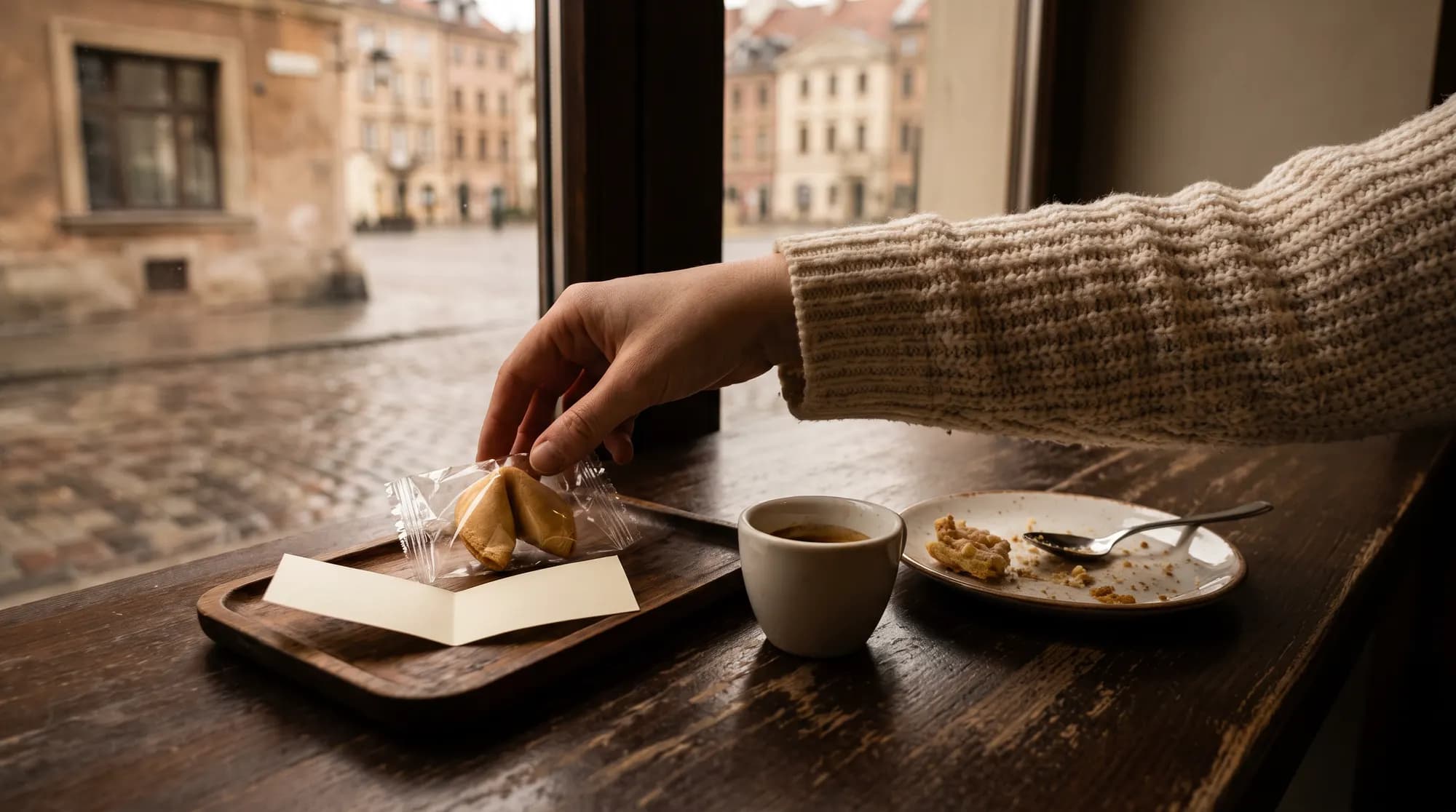
What to check in the last few minutes of a visit:
- Time from request to payment. If guests wait longer for the bill than for dessert, you have a problem. A card terminal brought to the table and a clear routine for the team solve most cases.
- How you respond to feedback. A guest who says at payment that the dish was too salty is giving you a chance to fix it on the spot. Thank them, apologise and offer a solution. Handled well, the conversation shows that you take feedback seriously before they describe their disappointment online. You must never ask a guest not to leave a review, though.
- A goodbye gesture. A thank-you, an invitation to come back, a small sweet touch with the bill. It is the kind of detail people mention to friends.
- A reason to return. A card with the date of the next themed dinner or an invitation valid from next week.
Perks at no cost: partnerships with brands
You do not have to fund every gesture towards guests yourself. Brands that want to reach a particular group of people look for places where that group actually spends time, and your venue is one of them. Partnerships can take the form of product tastings, joint events, rewards for regulars funded by a partner or materials handed to guests together with the bill.
Before you say yes, agree a few ground rules:
- the brand suits your guests and does not compete with you,
- you approve everything that reaches your guests,
- your staff do not get extra work that slows down service,
- you can end the partnership when it stops working for you.
This is how Fortuners works. We deliver fortune cookies to your venue and your staff serve them with the bill. Everything is paid for by a brand whose offer is printed on the slip inside, below the fortune. You pay nothing and change nothing about how your venue runs. You approve every brand and every fortune before launch, and you can say no or opt out at any time. We never advertise competing restaurants or cafés, alcohol, gambling or politics.
A free dessert like this will not raise your average check, but it improves the end of the visit at no cost to you and without touching your margin. If you are curious where the custom of serving fortune cookies came from, read fortune cookie origin: history, production and serving.
A 90-day plan and the metrics to track
A plan only works if every lever gets both actions and a measure. Split the work into three stages and do not change everything at once, or you will not know what worked.
90-day plan to increase restaurant sales
- Week 1: diagnosis from POS reports, reviews and observing the dining room. Write down baseline values for every metric.
- Week 2: fix your Google Business Profile (category, hours, photos, menu) and reply to any unanswered reviews.
- Week 2: choose three items to recommend and practise one sentence for each with the team.
- Weeks 3–4: menu changes based on the menu engineering matrix. Highlight the stars, remove the weakest items.
- Weeks 3–6: one promotion for your slowest time of day, with the break-even point worked out in advance.
- Weeks 5–6: ask every guest for a review after payment, with a QR code on the bill tray.
- Weeks 7–8: launch a loyalty program or next-visit invitations.
- Weeks 7–10: one recurring event on your slowest weekday.
- Weeks 9–12: a partnership with a brand or a neighbouring business that gives guests a perk at no cost to you.
- Week 12: compare metrics with the baseline and decide what stays and what stops.
Metrics to keep in a single spreadsheet:
| Metric | How to calculate | Data source | How often |
|---|---|---|---|
| Guest count (covers) | Total guests served | POS system | Weekly |
| Average spend per guest | Sales ÷ covers | POS system | Weekly |
| Share of bills with dessert | Bills with dessert ÷ all bills | POS system | Weekly |
| Sales in quiet hours | Sales within the chosen time slot | POS system | Weekly |
| Share of regular guests | Bills with a loyalty card ÷ all bills | Loyalty program, guest survey | Monthly |
| New reviews and average rating | Reviews per month and their average | Google Business Profile | Monthly |
| Food cost | Cost of ingredients used ÷ net sales | Stock records, invoices | Monthly |
Three measurement rules: compare the same weekdays (Tuesday with Tuesday), look at four-week periods rather than single days, and log outside events in your spreadsheet, such as a heatwave, roadworks or a local festival. After 90 days you will know not only whether sales grew, but which lever made the difference.
If you want to add something to the plan that needs no budget and no extra work from your team, sign up your venue with Fortuners or get in touch through our contact page.
Frequently asked questions
Where should I start if my restaurant sales are dropping?
Start with your POS reports for the last 8–12 weeks. Split sales into guest count, average spend per guest and day of the week, then compare the same weeks with the previous period. Only once you know which number fell should you pick your actions: a drop in footfall needs a different fix than a lower check.
How do I increase sales in a café or coffee shop?
The same three levers apply, in different proportions. A café check is usually small, so visit frequency (a stamp card, a regular time of day) and pairing food with coffee, such as cake or a takeaway sandwich, matter a lot. Watch the morning rush too: a queue that puts off people on their way to work is lost sales.
Do discounts increase restaurant sales?
They increase traffic, but not always profit. A percentage discount on the whole bill cuts the margin on every guest, including those who would have come anyway. It is safer to add something with a low food cost, limit the offer to quiet hours and work out your break-even number of extra guests before you launch.
Can I offer guests a discount or a free dessert for a Google review?
No. Google's Maps content policy prohibits offering incentives such as discounts or free goods in exchange for a review. You also may not discourage negative reviews or ask only happy-looking guests. You can ask every guest in the same way and make leaving a review easy, for example with a QR code.
How long does it take to see results?
Changes to service and the menu, such as suggesting desserts, usually show up in your reports within a few weeks. Local visibility and visit frequency grow more slowly, which is why the plan in this guide runs for 90 days. Compare four-week periods with matching weekdays and note outside factors such as weather or city events.